Feb 28, 2026
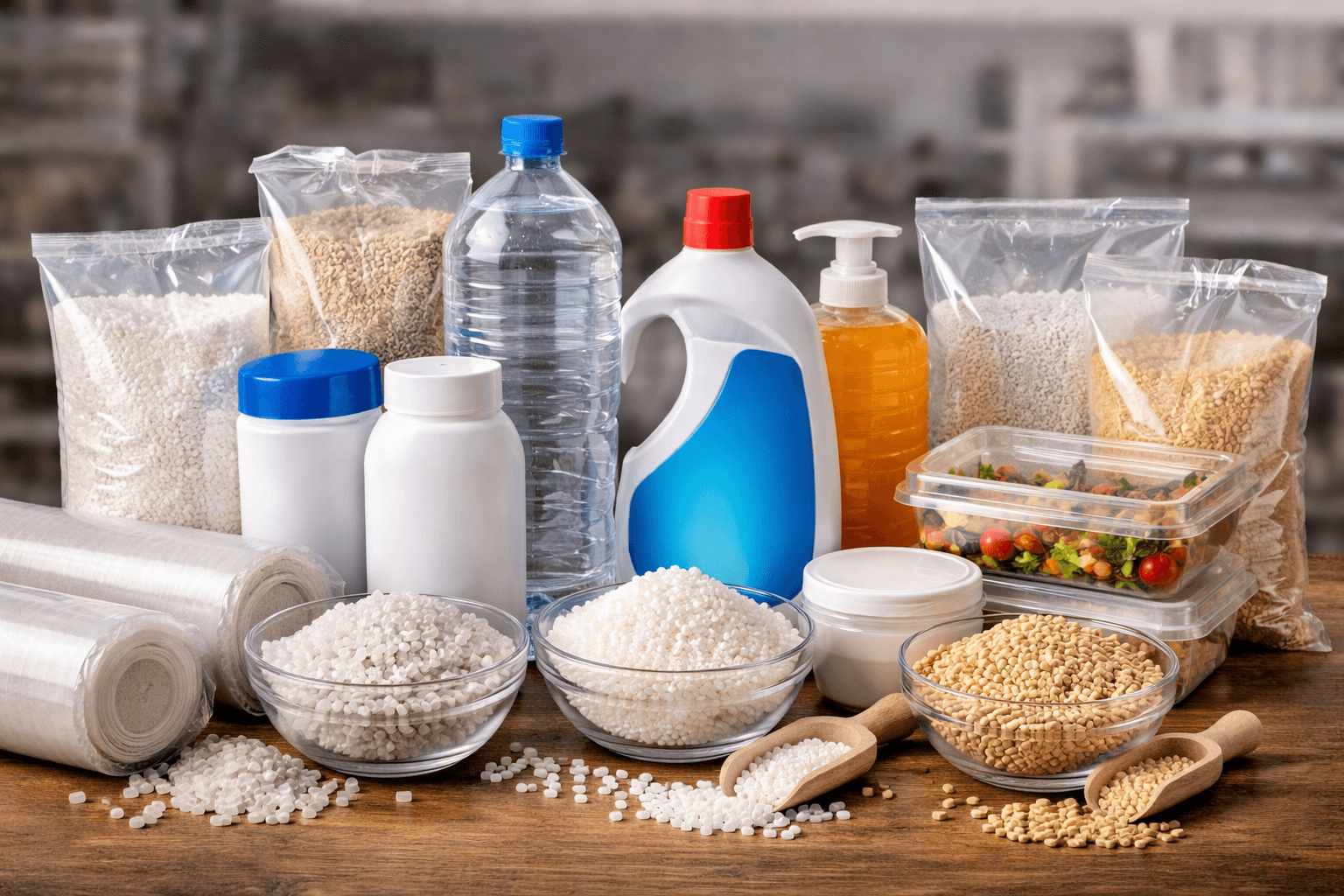
Rigid packaging plays a critical role in industrial supply chains, FMCG distribution, pharmaceuticals, chemicals, lubricants, and food storage. Unlike flexible packaging, rigid packaging products retain their shape and structural strength during handling, stacking, and transportation.
At Source, India’s leading industrial raw material ecosystem for polymers, chemicals, additives, and sustainable materials, we help manufacturers select the right polymer grades for rigid packaging applications from shampoo bottles to 200-litre industrial drums.
This guide explains which HDPE, LDPE, PP, and PET grades are used in rigid packaging and how to select the right one for your manufacturing needs.
What is Rigid Packaging?
Rigid packaging refers to plastic products that:
Maintain structural shape
Do not bend easily
Provide stacking strength
Offer durability during transport
Common Examples:
Bottles
Containers
Drums
Jerry cans
Crates
Storage tanks
Polymers Mainly Used:
HDPE (High Density Polyethylene)
LDPE (Low Density Polyethylene)
PP (Polypropylene)
PET (Polyethylene Terephthalate)
Each polymer offers a unique balance of strength, chemical resistance, flexibility, and processability.
How to Choose the Right Polymer Grade for Rigid Packaging
Selecting the right plastic grade depends on:
1 Container Size: Small bottles and large drums require different blow moulding grades.
2 End Use Application: Food, pharma, chemicals, or lubricants all have different compliance needs.
3 Manufacturing Process: Most rigid packaging is produced via:
Extrusion Blow Moulding
Injection Moulding
Blow-Fill-Seal (BFS)
4 Regulatory Requirements: Food contact and pharmaceutical packaging must meet safety standards.
5 Mechanical Performance: Impact strength, ESCR (Environmental Stress Crack Resistance), stiffness, and stacking strength are key.
Comparison of Polymers Used in Rigid Packaging
Property | HDPE | LDPE | PP | PET |
Rigidity | Very High | Low | High | Very High |
Impact Strength | High | Medium | Medium-High | High |
Chemical Resistance | Excellent | Good | Good | Moderate |
Heat Resistance | Medium | Low | High | High |
Clarity | Low | Medium | Medium | Very High |
Common Process | Blow Moulding | Blow Moulding | Injection/Blow | Injection Stretch Blow |
HDPE Grades Used in Rigid Packaging
HDPE is the backbone of rigid packaging. It offers high strength, stiffness, and chemical resistance, making it ideal for industrial containers and jerry cans.
1 Small Containers (< 20 Litres)
Used For:
Shampoo bottles
Edible oil jars
Small jerry cans
Common Grade Group:
HDPE GPBM (General Purpose Blow Moulding Grade)
Why GPBM?
High strength-to-density ratio
Good impact resistance
Excellent chemical resistance
Good processability
GPBM grades are widely used for FMCG packaging and light industrial containers.
2 Medium Containers (20–200 Litres)
Used For:
Chemical cans
Water tanks
Storage drums
Common Grade Group:
HDPE MBM (Medium Blow Moulding Grade)
Why MBM?
Improved ESCR
Better stacking strength
Higher stiffness
Suitable for chemical storage
These grades are designed for heavier-duty industrial applications.
3 Large Drums (>200 Litres)
Used In:
Industrial storage
Chemical transportation
Hazardous material packaging
Common Grade Group:
HDPE LBM (Large Blow Moulding Grade)
Why LBM?
High melt strength
Superior environmental stress crack resistance
Excellent structural integrity
Designed for large-volume extrusion blow moulding
Which Grade is Used for Pharmaceutical Bottles?
Pharmaceutical and nutraceutical packaging requires flexibility, purity, and compatibility with sterile production processes.
Polymer Used: LDPE
Grade Type: LDPE Blow Grade (LD Blow)
Why LDPE for Pharma?
Flexible and squeezable
Safe for medicinal packaging
Suitable for eye-drop and syrup bottles
Compatible with Blow-Fill-Seal (BFS) technology
Good moisture barrier
LDPE blow grades are widely used in regulated pharmaceutical environments.
What Grades Are Used for Caps & Closures?
Caps and closures demand dimensional stability and torque strength.
Common Materials:
PP Random Copolymer
PP Copolymer (PPCP)
LD Heavy Grades
Used For:
Bottle caps
Tube laminates
Closures
Flip tops
Why PP?
High stiffness
Good hinge performance
Excellent mouldability
Heat resistance
PP moulding grades are ideal for injection moulding applications like caps and closures.
Frequently Asked Question (FAQs) for Rigid Packaging Polymer Grades
What is the best plastic grade for HDPE jerry cans?
HDPE GPBM or MBM grades are commonly used depending on container size and required ESCR performance.
Which polymer is used for edible oil containers?
HDPE blow moulding grades are widely used for edible oil containers due to strength and chemical resistance.
Which plastic is used for pharmaceutical bottles?
LDPE blow grades are commonly used because of flexibility and compatibility with Blow-Fill-Seal processes.
What is ESCR in HDPE?
Environmental Stress Crack Resistance (ESCR) measures a material’s resistance to cracking under stress and chemical exposure. It is critical for chemical containers.
Can PP be used for blow moulding?
Yes. PP can be blow moulded, but it is more commonly used in injection moulding for caps and closures.
What MFI should I look for in blow moulding grades?
Blow moulding grades typically have low to medium MFI to ensure proper parison strength and uniform wall thickness.
Want to Source the Right Rigid Packaging Grade?
Whether you manufacture:
Shampoo bottles
Edible oil containers
Chemical drums
Pharma bottles
Caps and closures
Source connects manufacturers and traders with verified HDPE, LDPE, PP, and PET rigid packaging grades.
Browse specifications, compare blow moulding grades, and connect directly with procurement specialists who understand rigid packaging requirements.
Back to Main Page

Platform Comparison
IndiaMART vs TradeIndia: India’s Top B2B Marketplaces Comparison
Mar 17, 2026

B2B Platform Comparison
Top Alternatives to IndiaMART for B2B Sourcing in India
Mar 16, 2026
Grade
Polymer Grades Used in Water Management Pipes: PVC & HDPE Guide
Mar 7, 2026
Grade
Polymer Grades Used in Footwear Manufacturing: EVA, PVC & POE Guide
Mar 5, 2026
Load More