Mar 17, 2026
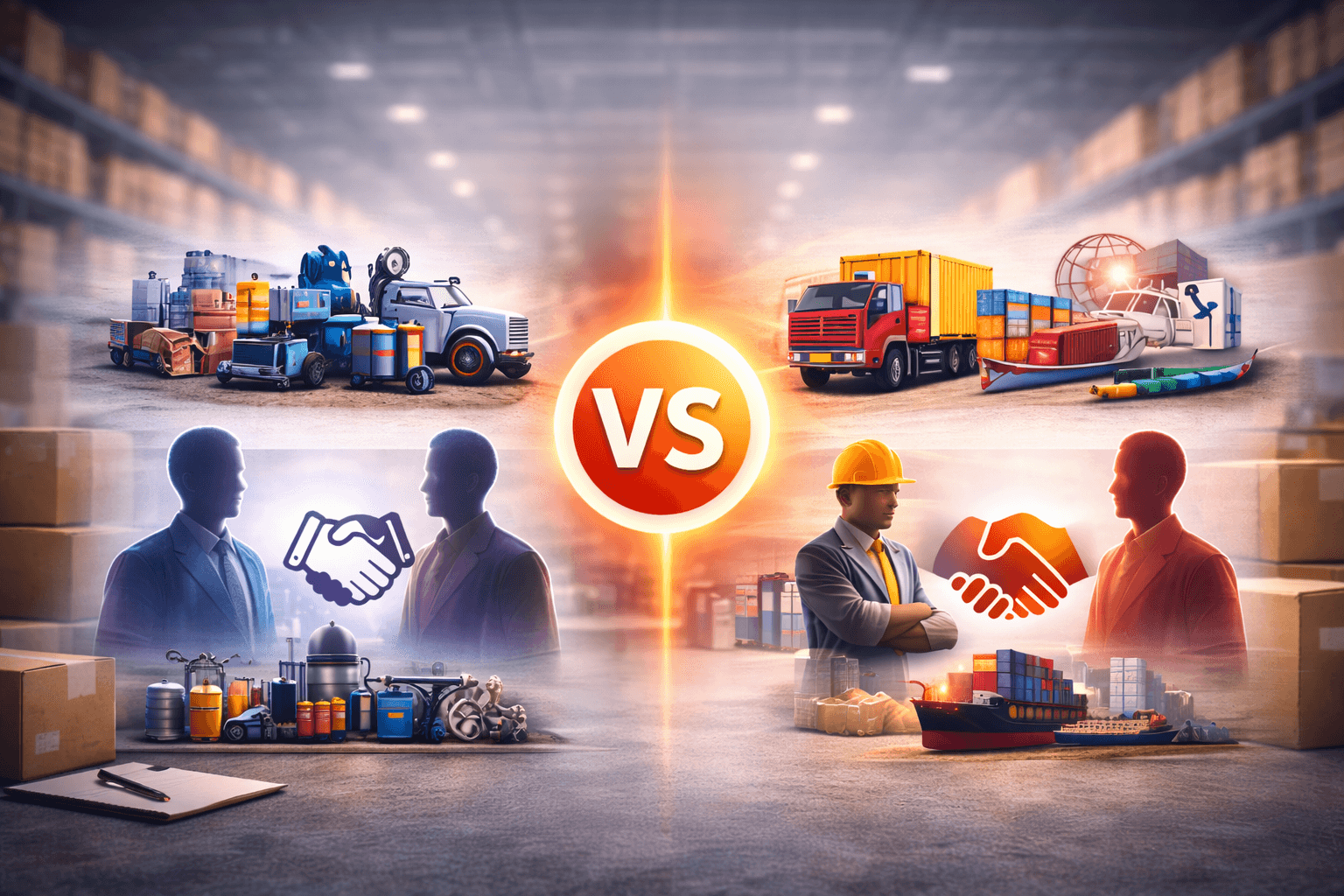
IndiaMART and TradeIndia are two of India's oldest B2B supplier directories. Both launched in 1996. Both connect manufacturers, traders, and distributors with potential buyers through listing-based enquiry systems. And both charge suppliers for premium visibility on a platform where buyers search for free.
So what's actually different? Quite a lot, depending on what you need.
If you're a manufacturer trying to decide where to spend your marketing budget, or a buyer trying to figure out which platform gives you better supplier access, this comparison breaks it down practically.
Quick Comparison: IndiaMART vs TradeIndia
Feature | IndiaMART | TradeIndia |
Founded | 1996 | 1996 |
Platform Type | B2B supplier directory | B2B directory + exporter focus |
Registered Suppliers | 7+ million | 5+ million |
Lead Generation Volume | High | Moderate |
Export Supplier Focus | Moderate | Strong |
Pricing Transparency | Not shown on listings | Not shown on listings |
Paid Plans From | ₹3,000/month | Custom (negotiated) |
Transaction Capability | Enquiry-based | Enquiry-based |
Mobile App | Yes (buyer + seller) | Yes |
Both platforms are enquiry marketplaces, not transactional ones. You get leads, not orders.
What IndiaMART Actually Is
IndiaMART is India's largest B2B marketplace by traffic and registered supplier count. It hosts millions of product listings across categories ranging from industrial machinery to textiles, chemicals, electronics, and food processing equipment.
The platform's core mechanic is simple: buyers search for a product, browse supplier listings, and submit enquiries. Suppliers on paid plans receive those enquiries as leads. The more you pay, the higher your listing appears and the more leads you get routed.
Key Features
Buyer Lead Routing (Pay Leads): IndiaMART's paid plans route a fixed number of buyer enquiries directly to suppliers each month. The MDC plan delivers around 7 leads/day; higher-tier Maximiser plans deliver significantly more.
Verified Supplier Badge: Suppliers who complete KYC verification get a TrustSEAL badge. Buyers on IndiaMART are taught to filter by verified status. Without it, you're competing against verified suppliers for the same enquiries.
Mobile App: IndiaMART's buyer app is genuinely popular among MSMEs sourcing across categories. Suppliers also get a seller app for managing enquiries, catalogues, and payments.
CRM and Lead Management: Higher-tier plans include a lead management interface where suppliers can track enquiry status, follow up, and monitor conversion.
Limitations
Pricing is not shown on any listing. Every conversation starts with negotiation.
High enquiry volume doesn't mean high quality. Many leads come from price-shoppers or low-intent researchers.
Because IndiaMART covers every category, industrial buyers share the platform with consumer-grade and retail searches.
Transactions happen off-platform. IndiaMART generates the lead; everything after is your responsibility.
For manufacturers who need structured procurement with pricing visibility and order tracking, a specialised platform like Source handles the full workflow rather than stopping at the enquiry stage.
What TradeIndia Actually Is
TradeIndia is a B2B directory with a stronger historical emphasis on exporters and manufacturers looking for international buyer connections. It operates similarly to IndiaMART but at smaller scale.
Where TradeIndia differentiates is in export-oriented sectors. Businesses in textiles, handicrafts, engineering goods, and agricultural commodities have found its export directory useful for reaching overseas buyers.
Key Features
Supplier and Exporter Directory: Covers both domestic and export-focused listings. The export section is more structured than IndiaMART's equivalent.
Lead Generation: Like IndiaMART, TradeIndia routes buyer enquiries to subscribed suppliers. Volume is lower, but some suppliers report better quality for export-focused enquiries.
Industry-Specific Sections: Dedicated categories for textiles, engineering, chemicals, and food products.
Limitations
Smaller buyer base means fewer enquiries overall.
Pricing is entirely opaque.
Platform UI and mobile experience lag behind IndiaMART.
Less investment in product development over the last several years.
Feature Comparison
Feature | IndiaMART | TradeIndia |
Marketplace Scale | Very large | Large but smaller |
Lead Volume | High | Moderate |
Export Supplier Listings | Moderate | Strong |
Domestic Coverage | Very broad | Broad |
Pricing Transparency | Poor | Poor |
Mobile App Quality | Good | Average |
Buyer Traffic | ~65M/month | Significantly lower |
Platform UI/UX | Better | Dated |
Payment Tools | Built-in | Limited |
When IndiaMART Makes Sense
IndiaMART is worth the investment if:
You need high lead volume and your team can handle and qualify large numbers of enquiries.
You sell across a wide range of product categories.
You're in sectors like packaging, electronics components, or consumer goods where IndiaMART's horizontal coverage works in your favour.
You want a verified supplier badge that Indian MSME buyers specifically look for.
When TradeIndia Makes Sense
TradeIndia is worth testing if:
Your business is export-oriented. Its export directory attracts a higher proportion of international enquiries.
You're in textiles, engineering goods, or agri-commodities where TradeIndia has stronger category presence.
You want to diversify your lead sources rather than rely entirely on IndiaMART.
The Verdict
For most industrial manufacturers and distributors in India, IndiaMART delivers more leads because it has more buyers. That's the honest answer.
TradeIndia is best treated as a supplementary channel rather than a primary one. Its edge is in export-oriented categories and manufacturer-to-manufacturer discovery.
What neither platform solves is the actual procurement process. Both stop at the enquiry. If you're a manufacturer sourcing raw materials like polymers, chemicals, or additives and need pricing visibility, order tracking, and reliable supply, a dedicated industrial materials platform like Source is built for that workflow specifically.
For a full breakdown of other platforms worth knowing about, see our guide to top alternatives to IndiaMART for B2B sourcing.
Frequently Asked Questions
Which is bigger, IndiaMART or TradeIndia?
IndiaMART. It has more registered suppliers, higher buyer traffic, and a larger catalogue. TradeIndia has a narrower but useful niche in export-focused categories.
Is TradeIndia good for export enquiries?
Relatively yes. Its directory attracts more export-focused buyers compared to IndiaMART's domestic-heavy traffic. If export leads are your priority, it's worth testing alongside IndiaMART.
Do either of these platforms show prices?
No. Both are enquiry-based platforms. Pricing is negotiated directly between buyer and supplier off-platform.
What's the difference between a supplier directory and a procurement platform?
A supplier directory (IndiaMART, TradeIndia) connects buyers with sellers and facilitates introductions. A procurement platform handles pricing, orders, logistics, and payments end-to-end. For industrial materials procurement, Source operates as a procurement platform rather than a directory.
Are there better alternatives for industrial raw material sourcing?
Yes. If you're specifically sourcing polymers, chemicals, or additives, general B2B directories have limited utility because they can't show live pricing or guarantee supply consistency. See our guide to top alternatives to IndiaMART for B2B sourcing for a full comparison.
This article is published by Source, India's industrial materials procurement platform. Source helps manufacturers buy polymers, chemicals, additives, and recyclables with live pricing and reliable supply across India.
Disclaimer
This article is published by Source, a platform that supplies industrial materials including polymers, chemicals, additives, and recyclables. The objective of this guide is to present an overview of commonly used B2B platforms so businesses can evaluate different sourcing options available in the market.
Back to Main Page
B2B Platform Comparison
Top Alternatives to IndiaMART for B2B Sourcing in India
Mar 16, 2026
Grade
Polymer Grades Used in Water Management Pipes: PVC & HDPE Guide
Mar 7, 2026

Grade
Polymer Grades Used in Footwear Manufacturing: EVA, PVC & POE Guide
Mar 5, 2026
Load More