Mar 5, 2026
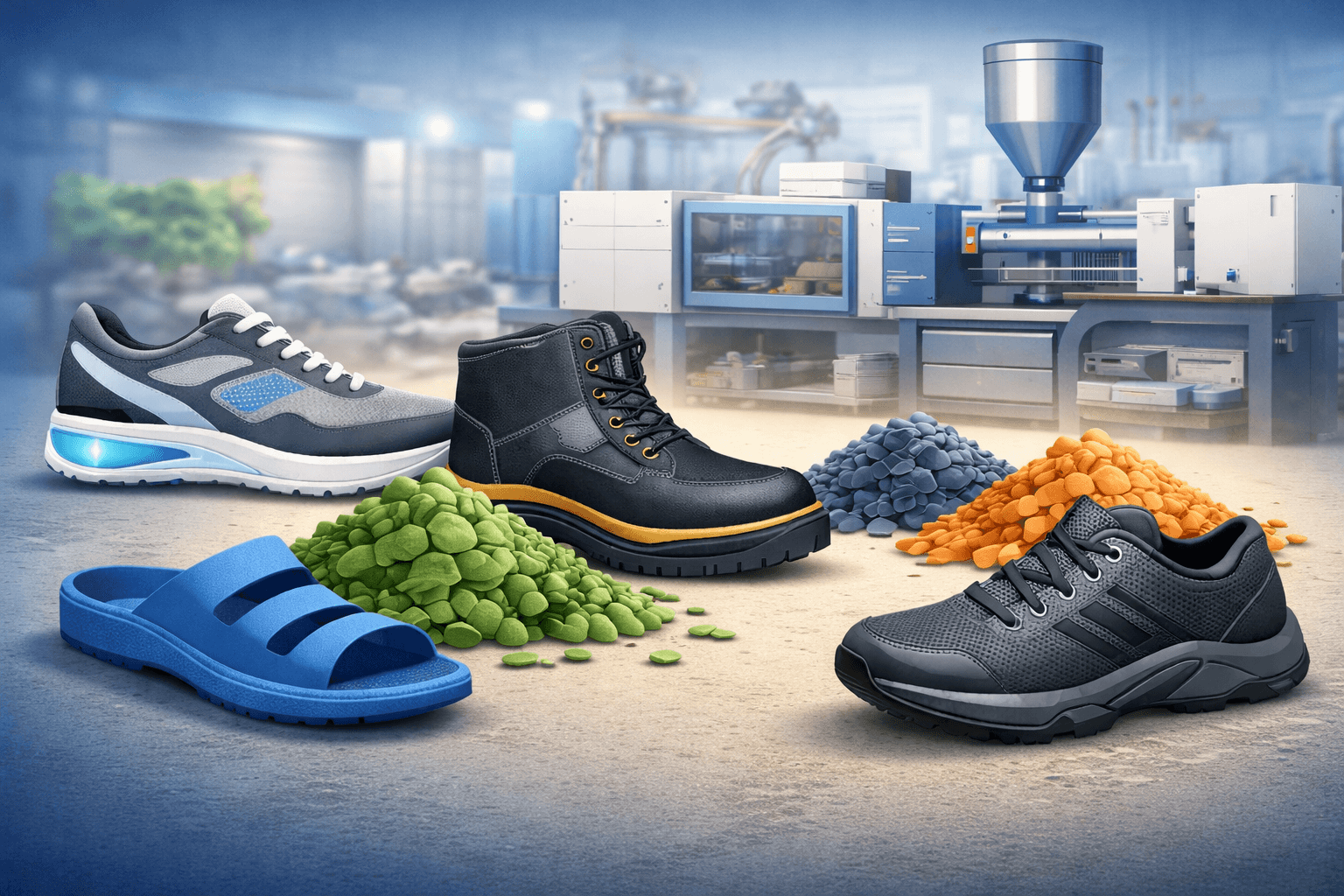
Footwear manufacturing relies heavily on specialized polymer materials that provide comfort, durability, flexibility, and grip. From sports shoes and sandals to industrial safety footwear, selecting the right polymer grade directly affects product performance and user comfort.
At Source, India’s industrial raw material ecosystem for polymers, chemicals, additives, and sustainable materials, footwear manufacturers can compare and source polymer grades used in shoe soles, midsoles, and molded footwear components.
This guide explains the key polymer grades used in footwear manufacturing, including EVA, PVC, and POE, along with their properties, applications, and how manufacturers choose between them.
What Polymers Are Used in Footwear Manufacturing?
Modern footwear production uses several polymer materials depending on the required balance of comfort, durability, and cost.
Common Polymers Used in Footwear
EVA (Ethylene Vinyl Acetate)
PVC (Polyvinyl Chloride)
POE (Polyolefin Elastomer)
TPR (Thermoplastic Rubber)
PU (Polyurethane)
Among these, EVA and PVC dominate mass footwear manufacturing, particularly for soles and molded sandals.
How to Choose the Right Polymer Grade for Footwear
Selecting the right material depends on several technical and commercial considerations.
1️⃣ Comfort & Cushioning
Running shoes and sports footwear require high cushioning and shock absorption.
2️⃣ Weight
Lightweight footwear improves user comfort and reduces fatigue.
3️⃣ Flexibility
Flexible soles improve walking comfort and durability.
4️⃣ Cost Considerations
PVC is generally cheaper, while EVA offers higher comfort but at a higher cost.
5️⃣ Slip Resistance
Anti-slip performance is critical for both sports footwear and safety shoes.
Comparison of Footwear Sole Materials
Feature | EVA | PVC |
Comfort | High | Medium |
Cost | Higher | Lower |
Weight | Light | Heavy |
Flexibility | High | Low |
Cushioning | Excellent | Moderate |
Slip Resistance | Good | Moderate |
EVA is widely preferred for comfort-driven footwear, while PVC is commonly used for low-cost molded footwear and sandals.
EVA (Ethylene Vinyl Acetate) in Footwear Manufacturing
What is EVA?
EVA is a copolymer of ethylene and vinyl acetate. The presence of vinyl acetate provides softness, elasticity, and cushioning properties, making EVA one of the most widely used materials for footwear soles.
Why EVA is Used in Shoe Soles
EVA is highly valued in the footwear industry due to its balance of flexibility, cushioning, and lightweight characteristics.
Key Advantages
Lightweight material
Flexible and comfortable
Waterproof
Good shock absorption
High friction for anti-slip performance
Excellent cushioning
Common Applications
EVA is widely used in:
Sports shoe soles
Sandals and slippers
Running shoes
Midsole cushioning layers
Kids footwear
EVA Vinyl Acetate Content Used in Footwear
The softness and flexibility of EVA depend on the percentage of vinyl acetate.
Common EVA Grades
Vinyl Acetate Content | Application |
18% VA | Basic footwear, sandals |
28% VA | Premium sports shoes and cushioning soles |
Higher vinyl acetate content generally provides greater softness and elasticity.
PVC (Polyvinyl Chloride) in Footwear Manufacturing
PVC is another commonly used polymer in molded footwear, particularly where cost efficiency is important.
Why PVC is Used
PVC footwear is commonly used for:
Low-cost sandals
Rain footwear
Industrial footwear
Casual molded shoes
Key Properties
Durable material
Good abrasion resistance
Lower raw material cost
Easy to process in injection molding
However, PVC soles tend to be heavier and less flexible compared to EVA.
What is POE Used For in Footwear?
Polyolefin Elastomer (POE) is commonly blended with EVA to improve mechanical and comfort properties.
Why POE is Mixed with EVA
Footwear manufacturers blend POE with EVA to:
Increase softness
Improve bounce-back performance
Enhance anti-slip properties
Improve flexibility
POE acts as a performance modifier, improving comfort and durability in sports and premium footwear.
Comparison of Footwear Polymer Performance
Property | EVA | PVC | EVA + POE Blend |
Cushioning | High | Low | Very High |
Flexibility | High | Low | Very High |
Weight | Light | Heavy | Light |
Comfort | Excellent | Moderate | Excellent |
Cost | Medium | Low | Medium-High |
Blending EVA with POE allows manufacturers to produce premium comfort footwear without sacrificing durability.
Frequently Asked Questions about Footwear Polymer Grades
Which polymer is commonly used in shoe soles?
EVA (Ethylene Vinyl Acetate) is one of the most widely used polymers for shoe soles because it is lightweight, flexible, and provides excellent cushioning.
Which EVA percentage is used in footwear?
Footwear manufacturers commonly use EVA grades with 18% or 28% vinyl acetate content, depending on the required softness and flexibility.
Is EVA better than PVC for shoes?
Yes. EVA is generally considered better for comfort and cushioning, while PVC is used for lower-cost footwear.
Why is POE added to EVA?
POE is blended with EVA to improve softness, flexibility, and bounce-back performance in footwear soles.
Which material is cheaper for footwear soles?
PVC is usually cheaper than EVA, which is why it is commonly used for budget footwear products.
Can EVA soles be used for sports shoes?
Yes. EVA is widely used in sports shoes because it offers cushioning, shock absorption, and lightweight performance.
Ready to Source Footwear Polymer Grades?
Footwear manufacturers require consistent material performance to maintain product quality and comfort.
Source connects footwear manufacturers with reliable suppliers of EVA, PVC, and POE polymer grades used in shoe soles, sandals, and sports footwear.
Browse available grades, compare technical specifications, and connect directly with suppliers who understand footwear manufacturing requirements.
Back to Main Page
Platform Comparison
IndiaMART vs TradeIndia: India’s Top B2B Marketplaces Comparison
Mar 17, 2026

B2B Platform Comparison
Top Alternatives to IndiaMART for B2B Sourcing in India
Mar 16, 2026
Grade
Polymer Grades Used in Water Management Pipes: PVC & HDPE Guide
Mar 7, 2026
Load More